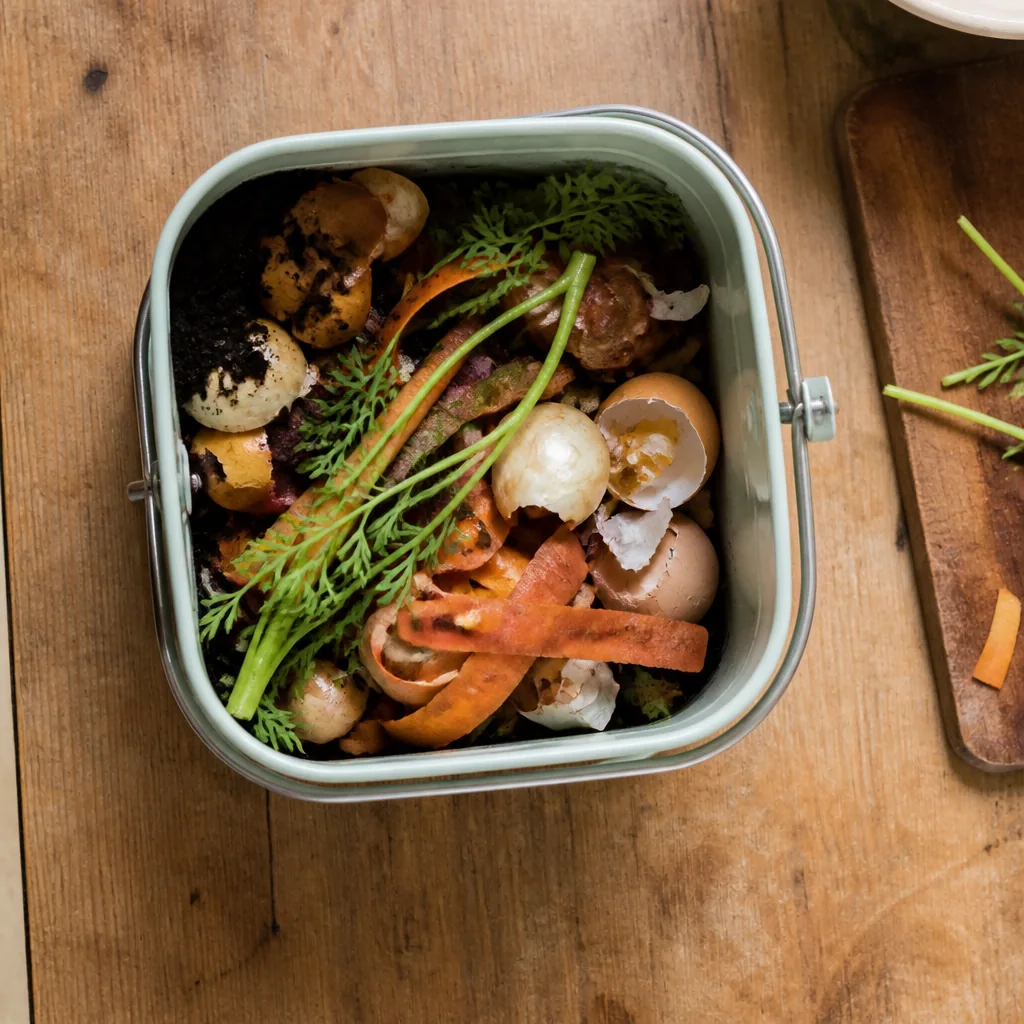
By the time you've saved trimmings for stock, cooked the stems and leaves, revived what was tired and eaten the fridge clean, there is still a small pile left over. The onion skins after the stock is strained, the coffee grounds, the tea leaves, the banana peels and eggshells, the bits that were never going to be dinner. This is the genuine end of the line for food in the kitchen — but it doesn't have to be the end of its usefulness. Sent to landfill, buried scraps break down without air and give off methane, doing quiet harm and helping no one. Composted, exactly the same scraps rot down cleanly into dark, crumbly matter that feeds soil and grows more food. Composting is simply the last link in the chain, the step that turns the truly inedible remainder from rubbish into something the garden, the window box or the community plot can use.
What composting actually is
Composting is nothing more than rot, managed. The same microbes and small creatures that break down leaves on a woodland floor will break down your kitchen scraps, and all they need to do it well is a rough balance of two things. The first is "greens" — wet, nitrogen-rich material like vegetable peelings, fruit scraps, coffee grounds and grass clippings. The second is "browns" — dry, carbon-rich material like cardboard, dead leaves, paper and woody stems. Greens bring moisture and nitrogen; browns bring structure, air and carbon. Get roughly equal amounts of each, keep it damp but not soaking, and the pile does the rest largely on its own.
You don't need to measure anything. The practical version is: every time you add a slop of wet kitchen scraps, add a similar handful of something dry and brown — a torn-up cereal box, a few scrunched sheets of paper, some dead leaves. That single habit prevents most of the problems beginners run into.
What to add — and what to keep out
Most plant kitchen waste is welcome: vegetable and fruit peelings and cores, the spent scraps from your stock pot, coffee grounds and paper filters, tea leaves, crushed eggshells, and stale bread in small amounts. From the rest of the house, add torn cardboard, paper towel, dead flowers and garden clippings.
Some things are better left out of a simple home compost. Meat, fish, dairy and cooked food with oil or sauce attract pests and smell as they rot, so keep them out of an ordinary open heap. Whole citrus and onion in large quantities can slow things down. Anything glossy, plastic-coated or labelled "compostable" for industrial facilities won't break down in a garden bin. When in doubt, plant scraps yes, animal products and anything greasy no.
No garden? You still have options
Composting is not only for people with a lawn and a heap at the bottom of it. A flat with a balcony, or even just a kitchen, has choices. A small closed compost bin or a wormery — a tidy, odourless box where composting worms eat your scraps — fits on a balcony or in a utility cupboard and produces rich compost for pot plants. A bokashi bin ferments food waste, including cooked scraps, in a sealed bucket under the sink. And in many places the simplest answer is a council food-waste collection: line a small caddy, fill it with scraps, and let the local scheme turn them into compost at scale. Not composting yourself doesn't mean the scraps can't be composted somewhere.
Keeping it easy and sweet-smelling
A compost heap only smells bad when something is out of balance, and the fix is nearly always the same: add browns and add air. A sour, wet, ammonia smell means too much green and too much moisture — stir in dry cardboard or leaves and it settles within days. Turning the pile occasionally with a fork lets air in and speeds everything up, because the helpful microbes need oxygen. A lid or cover keeps rain from waterlogging an outdoor bin. That's genuinely most of the maintenance; a compost heap is patient and forgiving, and time does the heavy lifting.
What you get at the end, after a few months, is a dark, earthy, crumbly material that smells like a forest floor — the finished compost. Spread it on beds, mix it into pots, or dig it in around plants, and the loop closes: scraps that could not be eaten go back into the ground and help grow the next round of food. That is a fitting place for this blog to end, because it's the whole idea in miniature. Nothing in the kitchen is truly waste. There's a use for the trimmings, the stalks, the leftovers and the tired vegetables — and for the very last bit that none of those could save, the soil is waiting.