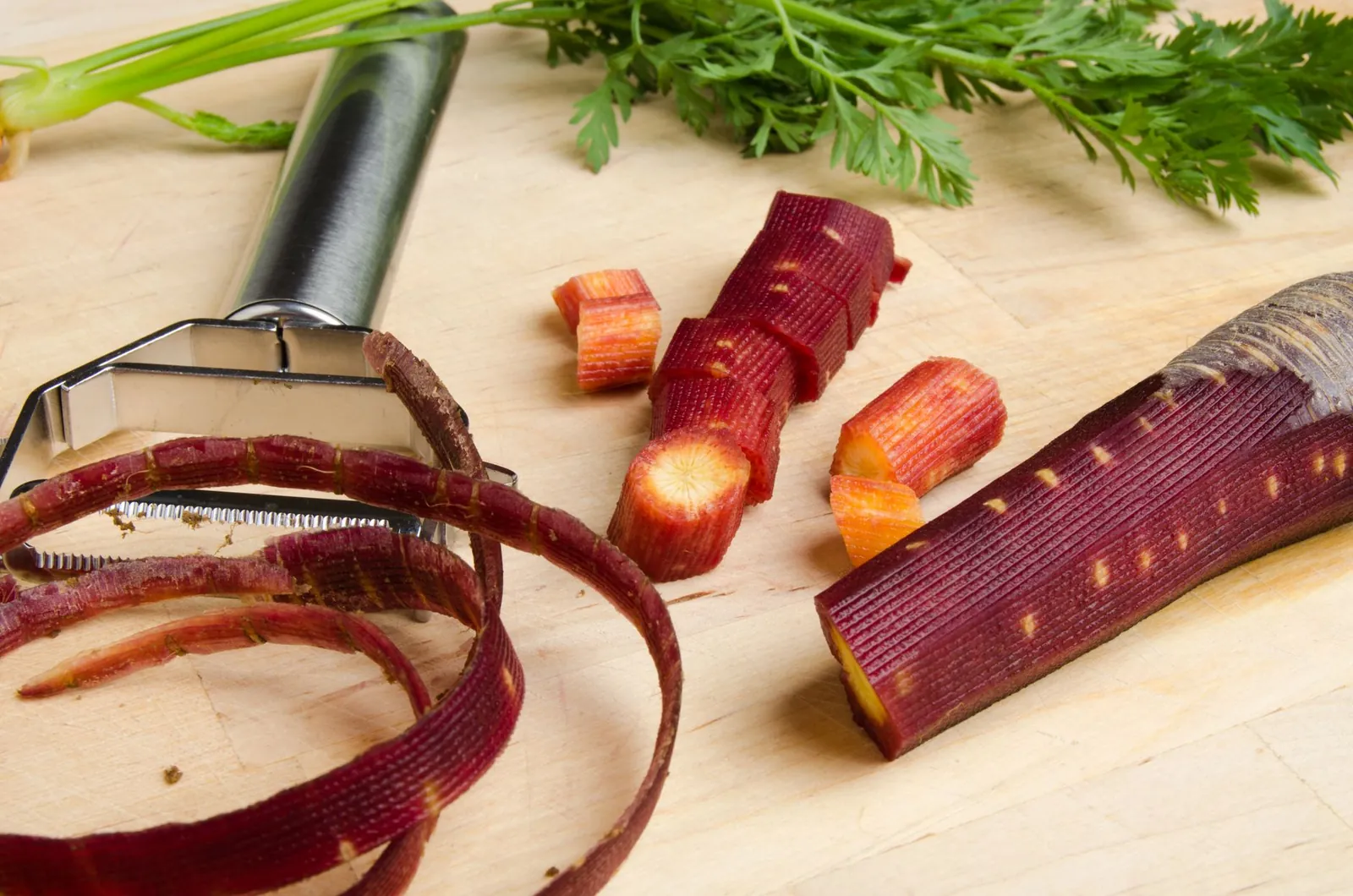
Every time you cook a vegetable, you throw a little of it away before it ever reaches the pan. The papery ends of an onion, the peel off a carrot, the woody base of a leek, the stalks left over from a bunch of parsley, the tough dark tops of celery. On their own each one is nothing — a scrap you brush off the board without a thought. But a kitchen that cooks most nights generates a surprising volume of these offcuts over a week, and nearly all of them share one useful quality: they are full of flavour that dissolves happily into hot water. That is the whole basis of stock. A scrap bag simply catches those offcuts before they hit the bin and holds them until you have enough to make something worthwhile. It costs nothing, takes no real effort, and turns the least glamorous part of cooking into the backbone of your soups, risottos and stews.
What the bag is, and where it lives
The bag is exactly what it sounds like: a container that lives in the freezer and collects clean vegetable trimmings until it is full. A large zip-lock bag works, so does a lidded tub or an old ice-cream carton. The freezer is doing two jobs here. It stops the scraps rotting while you build up a useful amount, and it slightly breaks down the cell walls of the vegetables as they freeze, which means they give up their flavour a little faster when you eventually simmer them.
Keep it somewhere you'll see it when you're cooking — the top of the freezer drawer, not buried at the back. The habit only works if adding to it is easier than reaching for the bin. Once it becomes automatic, you stop noticing you're doing it, and a full bag appears every week or two without any planning at all.
What to put in — and what to leave out
Good candidates are the aromatic, savoury offcuts that build a rounded background flavour. Onion skins and ends, garlic skins and stubs, carrot peels and tops, celery bottoms and leaves, leek trimmings, mushroom stems, parsley and thyme stalks, the core of a fennel bulb, corn cobs stripped of their kernels. Tomato offcuts add a little sweetness and colour. All of these can go in raw and unpeeled, provided they've been given a rinse.
Some things are better left out. The brassicas — broccoli, cauliflower, cabbage, sprouts — turn bitter and sulphurous when simmered long, and will drag a whole pot down with them. Starchy peelings like potato make stock cloudy and can taste dull. Beetroot will dye everything pink, which is fine if you want that and a problem if you don't. Very strong herbs like rosemary can dominate. When in doubt, taste your finished stock and adjust next time; the beauty of the method is that it forgives experimentation.
Making the stock
When the bag is full, tip its contents straight into a large pot — no need to thaw. Cover generously with cold water, bring it up to a gentle simmer, and leave it to tick over quietly for around forty-five minutes to an hour. Vegetable stock does not reward long boiling the way a meat stock does; simmer it too hard or too long and it turns flat and slightly bitter. A lazy bubble is all you want. A few peppercorns and a bay leaf lift it, and a pinch of salt near the end helps you judge the flavour, though it's often best left unsalted so you can season to taste in whatever dish it ends up in.
Strain the liquid through a sieve, press the spent scraps gently to squeeze out the last of the flavour, and let it cool. What you're left with is a light golden broth that tastes clean and vegetable-sweet — nothing like the salty intensity of a stock cube, and all the better for it. The used trimmings, now cooked and soft, are exactly the sort of thing that can go on to the compost heap.
Storing what you make
Stock keeps in the fridge for about four days, but it really belongs in the freezer, where a batch will hold for months. Freeze it in portions that match how you cook: a few in old jars for soups, and a tray of ice cubes for the times you just want a splash to deglaze a pan or loosen a sauce. Once you have a stash, you stop buying cartons, and the flavour of everything you build on it quietly improves.
Why the small habit adds up
None of this is difficult, and that is the point. You are not going out of your way, buying anything extra, or spending an evening on a project. You are catching what was already leaving the kitchen and getting one more useful thing out of it before it goes. A single onion end is trivial. A freezer bag's worth, simmered into a litre of good stock, is a real ingredient you'd otherwise have paid for. Do it for a month and the maths becomes obvious: less in the bin, more in the pot, and a fridge that always has the beginnings of dinner waiting in it.